


In this Article
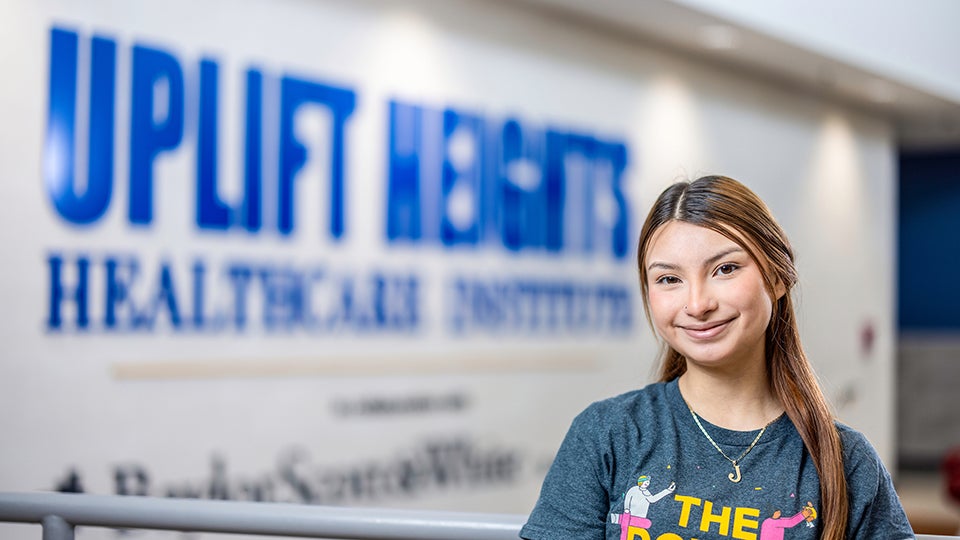
Featured above: Uplift Heights student Janelle Lopez
In this Article
This story is part of our Billion & Beyond series, highlighting the people behind more than $1 billion invested in advancing healthcare since 1978. That impact has long included educating future healthcare professionals—and today, it’s taking new shape with Uplift Education.
Across North Texas, healthcare providers face a growing challenge: persistent shortages in critical clinical and technical roles—positions that require years of training and are increasingly difficult to staff.
At Baylor Scott & White Health, leaders are addressing that gap by rethinking where the workforce pipeline begins, creating pathways into healthcare careers long before students ever apply for a job. For more than a century, the largest not-for-profit health system in Texas has paired care delivery with training and innovation—and is now extending that legacy into local classrooms.
One of the most visible examples of this strategy is unfolding in West Dallas, where—through support from Bloomberg Philanthropies—Baylor Scott & White partnered with Uplift Education to help transform Uplift Heights Preparatory School into Uplift Heights Healthcare Institute, a campus now designed to help introduce students to healthcare careers early.
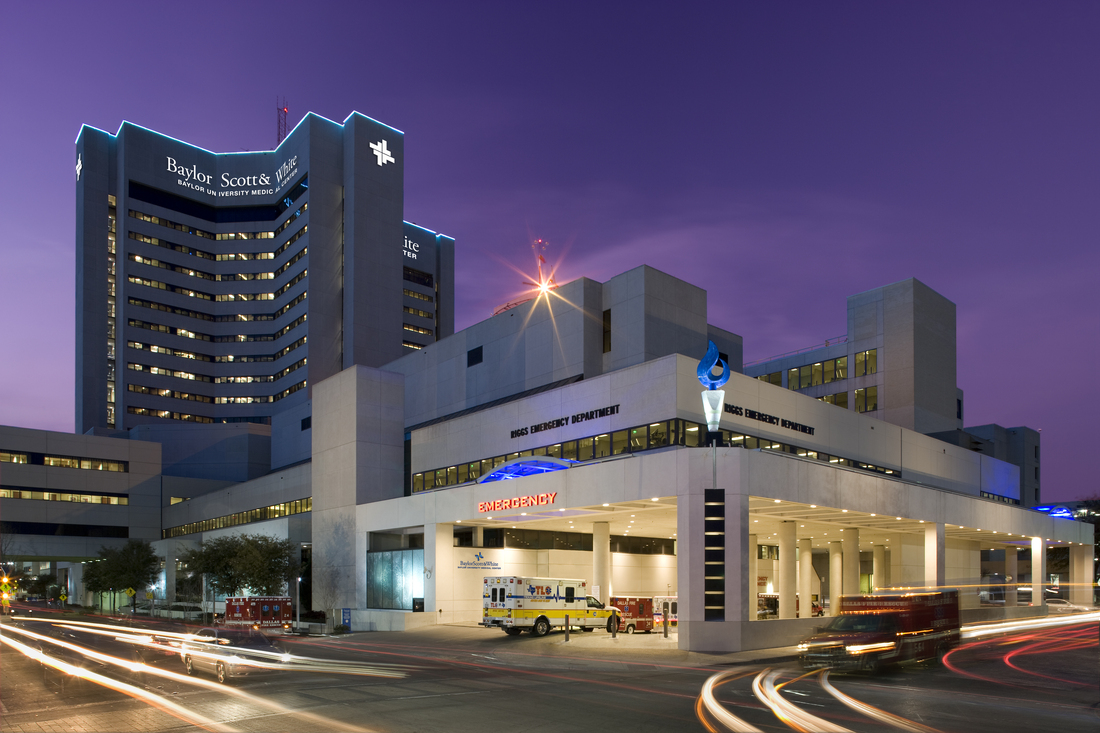
In 2023, Janelle Lopez was finishing eighth grade when Baylor Scott & White signage began appearing on the school building where she would soon begin high school. An Uplift student since kindergarten, Janelle had always talked about college, but healthcare wasn’t part of the plan. She imagined herself going to cosmetology school.
“I found out about Baylor Scott & White because I would pass by the school and see that they were putting up a sign,” she said. “People were talking about how the school was going to change. I was intrigued because I thought of a big opportunity for my future.”
As crews replaced the words Uplift Heights Preparatory with Uplift Heights Healthcare Institute, the change was more than cosmetic. For students like Janelle, it marked the beginning of a new set of possibilities.
Solving two problems at once
Healthcare systems across the region are facing workforce shortages—particularly in specialized, licensed roles that are essential to patient care. Meanwhile, many students in underserved communities graduate without clear pathways into high-demand careers that offer economic mobility.
Uplift Education serves 23,000 scholars across six Texas communities, many from historically underserved backgrounds. As Uplift leaders focused on helping students become career-ready and college-ready, Baylor Scott & White was looking for new ways to close critical gaps in hard-to-fill licensed roles.
“In the past, we didn’t have control over where our students would land or what kind of environment they would walk into. Now there’s a soft handoff to an employer who cares deeply about them.”
-Remy Washington, EdD, CEO of Uplift Education
In 2021, the two organizations began collaborating in smaller ways, helping Uplift alumni explore healthcare training and early-career roles through support from the Hamon Charitable Foundation.
“When we were considering healthcare systems to partner with, Baylor stood out,” said Remy Washington, EdD, CEO of Uplift Education. “Uplift isn’t afraid to try things differently, and Baylor leaders weren’t either.”
That shared willingness to innovate gained national momentum in 2023, when Bloomberg Philanthropies selected Baylor Scott & White as one of only 10 partnerships nationwide to receive funding through a new initiative designed to prepare high school students for careers in healthcare.
Through this initiative, Bloomberg Philanthropies awarded a $14.9 million grant to Baylor Scott & White Dallas Foundation, helping expand this work in North Texas. In partnership with Uplift Education, the investment supports the development of Uplift Heights Healthcare Institute in West Dallas, where economic mobility and access to opportunity are pressing needs.
The Bloomberg Philanthropies initiative now includes collaborations in 13 communities nationwide, representing over $270 million in philanthropic investment.
“What distinguishes Baylor Scott & White’s approach is how early and intentionally they engage students in the healthcare workforce pipeline,” said Kate Herman, program manager at Bloomberg Philanthropies. “Rather than focusing solely on near-term staffing needs, they are working alongside educators to embed healthcare pathways directly into the school experience, creating a long-term, sustainable model that benefits students, the health system and the broader community.
“Baylor Scott & White, along with our healthcare and education partners across the country, is leading the way in this first-of-its-kind initiative to solve for the millions of open roles in the healthcare industry, while also creating clear options and opportunities for students that lead to careers with family-sustaining wages.”
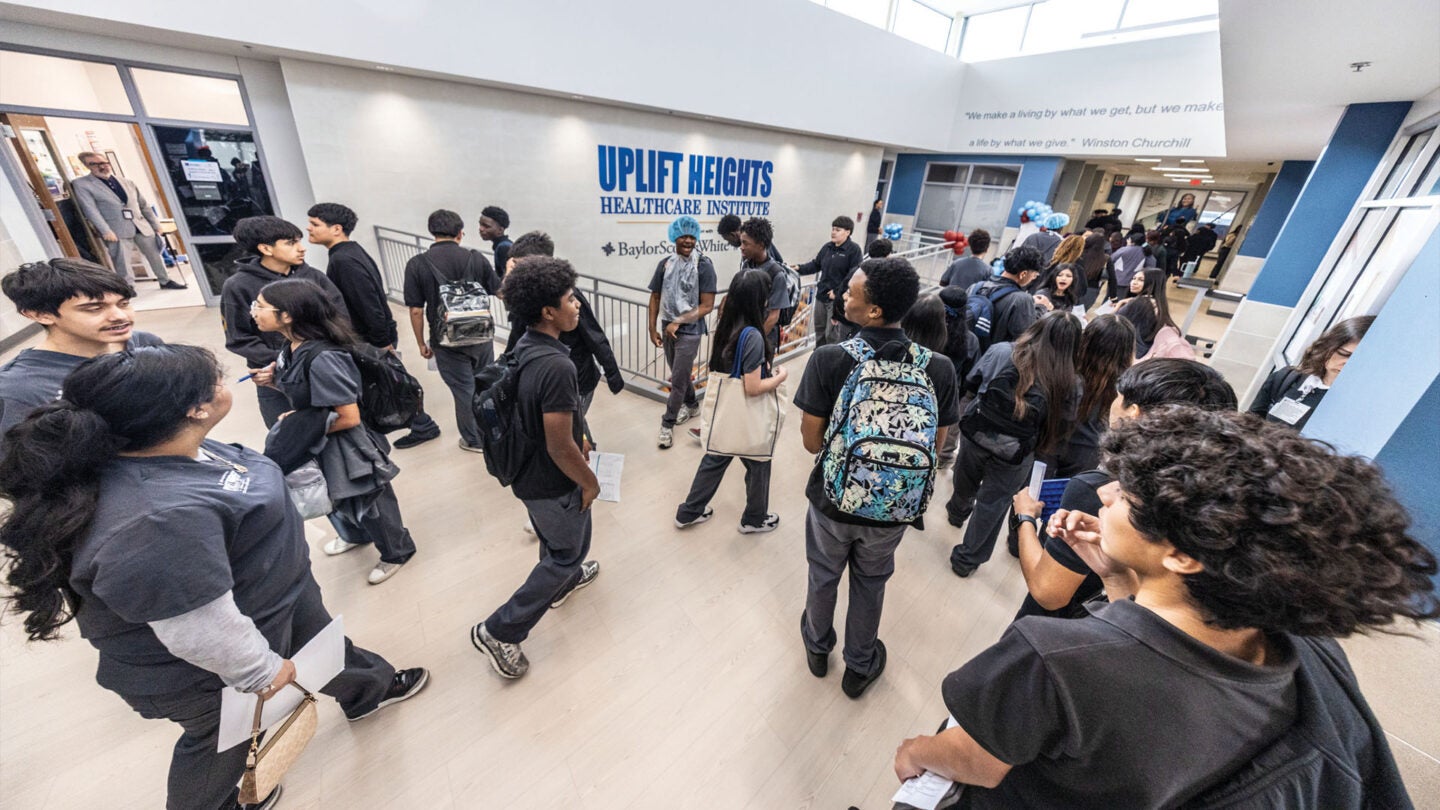
Scholars at Uplift Heights can pursue one of four healthcare pathways, spanning direct patient care, diagnostics, research and healthcare operations. A second campus, Uplift Grand in Grand Prairie, also offers healthcare pathways in partnership with Baylor Scott & White.
Early indicators are promising. After its first year as a healthcare-focused campus, Uplift Heights saw an overwhelming increase in students wanting to enroll.
“Our goal isn’t to get students into entry-level jobs and stop there,” said Phil Kendzior, director of workforce development at Baylor Scott & White. “We want to create pathways that allow them to reach those top-level licensed positions that are hardest to staff and most critical to patient care.”
“In the past, we didn’t have control over where our students would land or what kind of environment they would walk into,” Dr. Washington said. “Now there’s a soft handoff to an employer who cares deeply about them.”
From strategy to the classroom
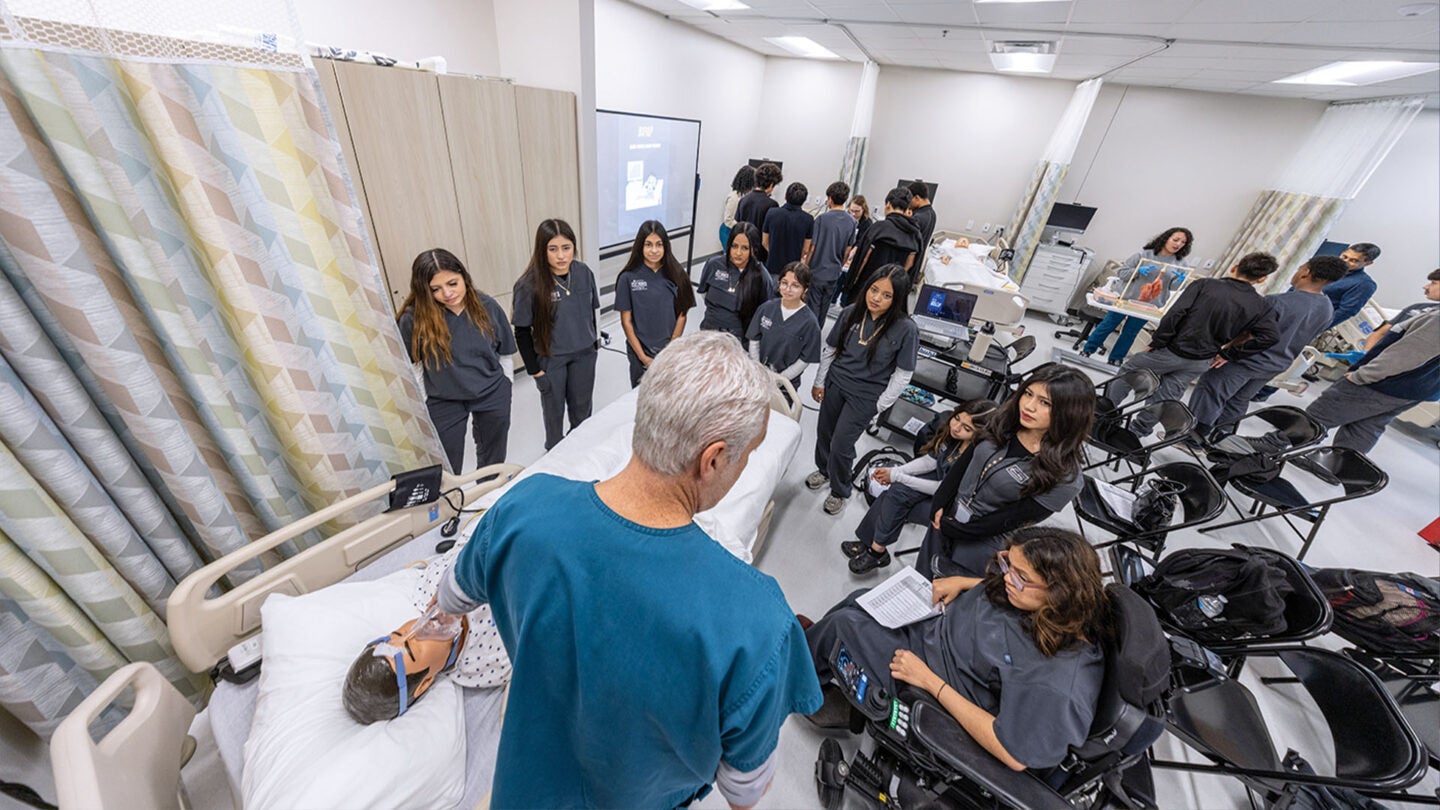
For students like Janelle, the partnership shows up in classrooms during quarterly workshop days, when Baylor Scott & White clinicians come to campus to lead hands-on demonstrations and simulations.
During one recent workshop, they compared a healthy pig lung with one damaged by disease.
In another room, clinicians demonstrated how interventional radiologists remove blood clots during a stroke, guiding a catheter through an artery in the wrist or groin and up to the brain.
The demonstrations introduce scholars to careers they may never have heard of—including interventional radiology, one of the hardest roles for hospitals to staff. Shortages can delay critical procedures for patients experiencing strokes or dangerous blood clots.
The goal isn’t to funnel scholars into a single role, but to help them see options and understand what it takes to reach them.
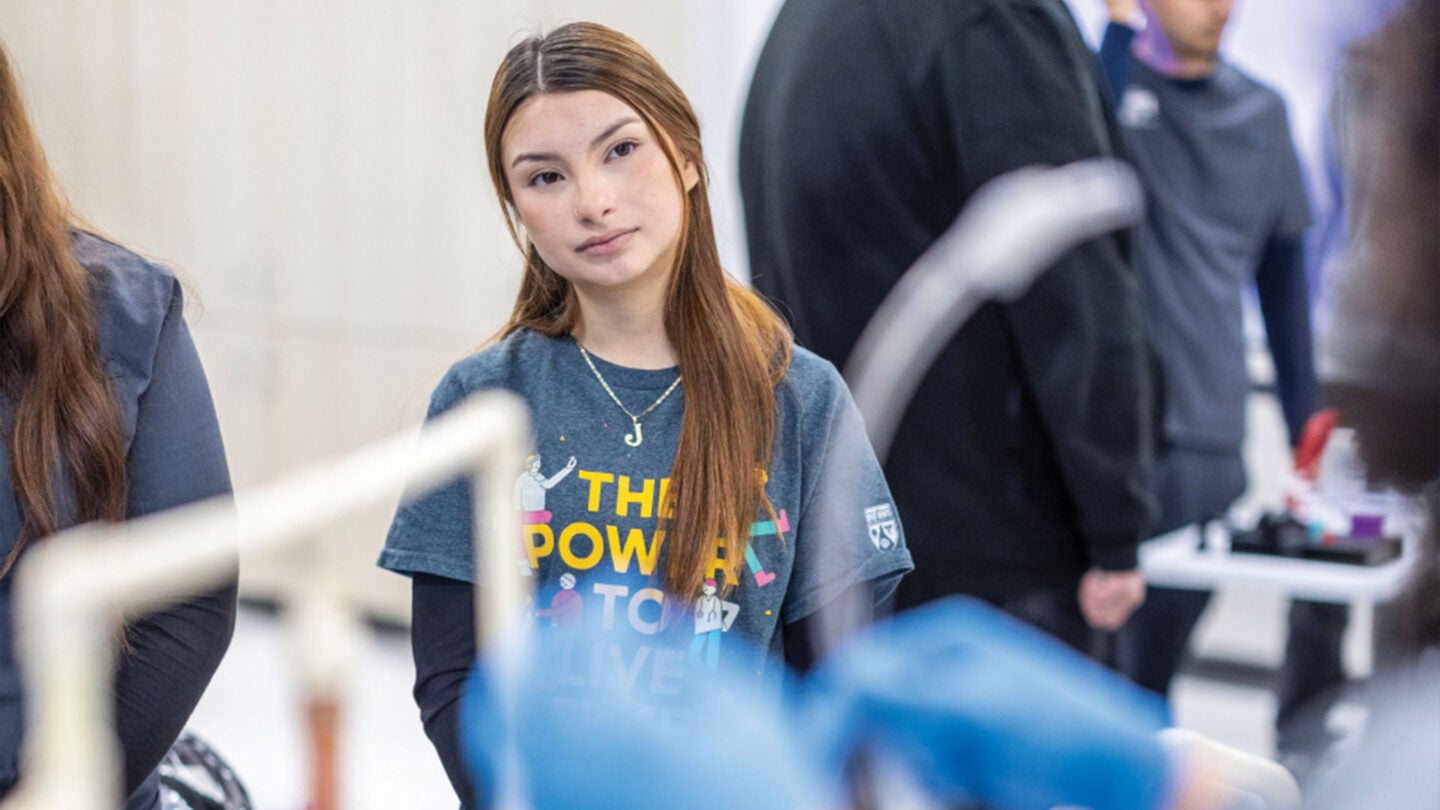
Now 16, Janelle is a sophomore on the healthcare pathway. She has already chosen her focus: diagnostic and therapeutic services. She’s especially interested in radiology, drawn not only to the technology, but to the human side of care.
As a bilingual student, she sees a future where she can help Spanish-speaking patients feel understood in moments that can feel overwhelming.
“I like the idea of being there for people when they’re scared or confused,” she said. “Being able to explain things, to help them feel comfortable—that matters.”
Janelle now sees healthcare as a field where she belongs and where she can make a difference.
Looking ahead
For Baylor Scott & White, the partnership represents a long-term investment in workforce sustainability and community well-being, beginning years before students ever enter the workforce.
Janelle is still early in her journey. She has years of learning ahead, choices to make and credentials to earn. But where uncertainty once lived, clarity is taking hold.
A sign on her school building helped her see what was possible. One day, she may see her own image on those hallway walls, taking her place in a healthcare workforce that reflects the community it serves.
For more information, contact