



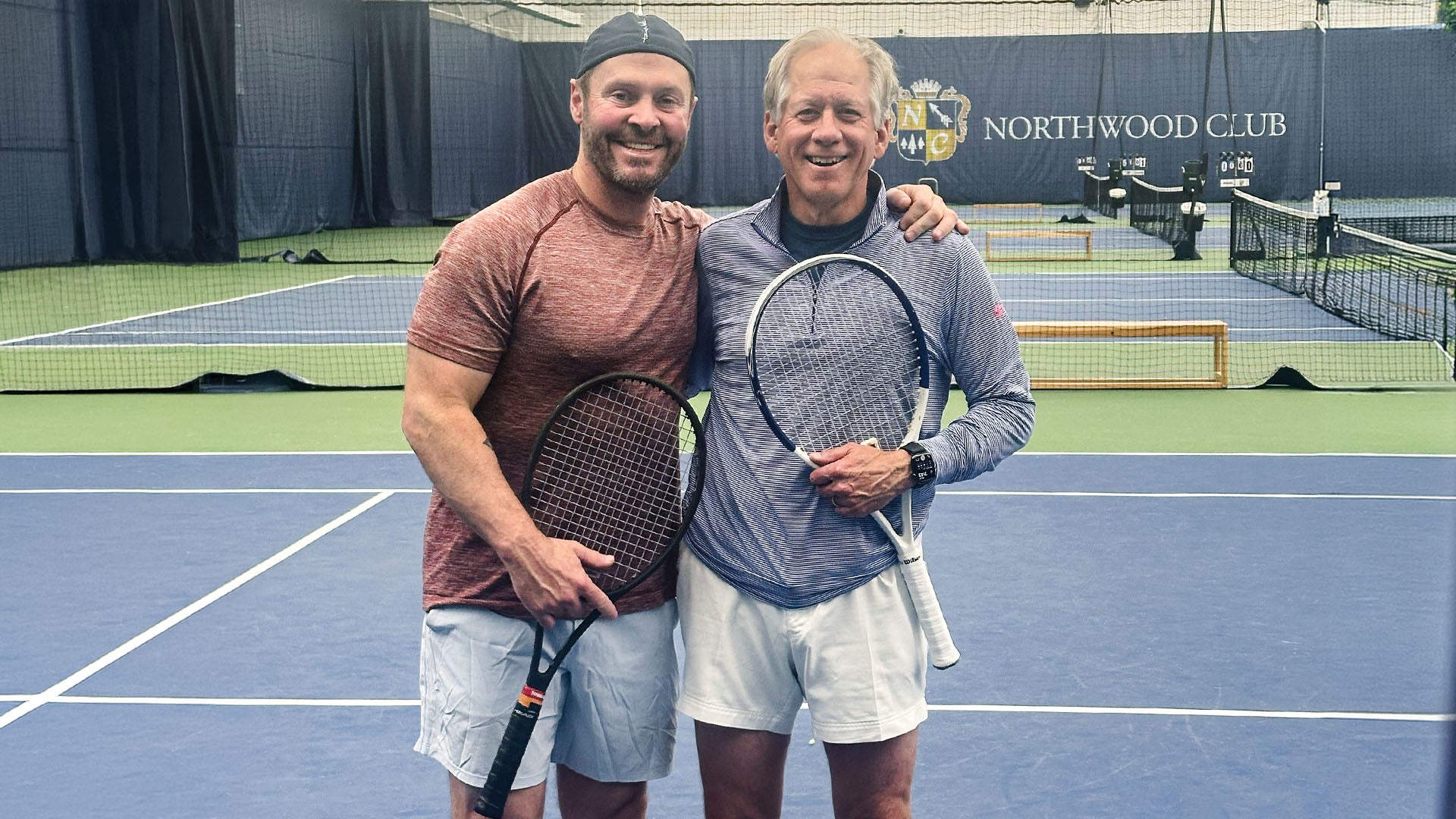
Court Gunn, MD, left, and Tim Perry at Northwood Club, where the two play tennis together.
A seasoned distance runner who had completed eight marathons, Tim Perry was used to pushing through fatigue. But one morning, running alongside his son, he experienced an unexpected tightness in his chest.
At first, Tim dismissed it as a sign of aging. But after mentioning it to his primary care physician, he underwent a CT scan with contrast. The timing proved critical: several coronary arteries were severely blocked.
Tim was in Houston when he received the news and needed to return to Dallas for care. But snow and ice were paralyzing travel across Texas. “I booked tickets on three different airlines, hoping one would get me home,” he said.
He made it back to Dallas and to his appointment at Baylor University Medical Center, with his wife, Heidi, arriving shortly after. Further testing revealed the situation was serious. Tim needed a quintuple bypass surgery.
Just days earlier, Tim had finished a half-marathon—but he had done so with severely compromised blood flow. An angiogram revealed multiple severe blockages, including one artery that was nearly closed.
Tim asked how he was even alive. “They told me it was because I exercise. My heart had found ways to keep pumping blood.”
Without intervention, however, a catastrophic heart attack could have been next.
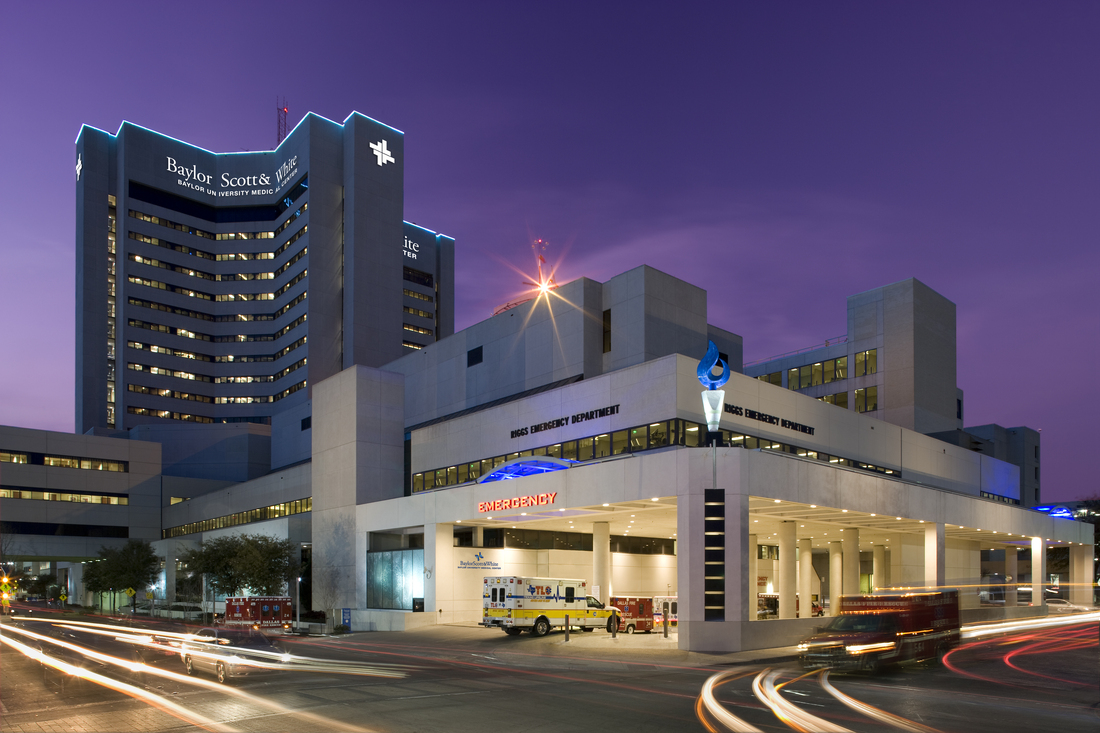
Tim’s care would soon take place at Baylor Scott & White The Heart Hospital – Dallas, located on the campus of Baylor University Medical Center and part of Baylor Scott & White The Heart Hospital, a network of six cardiovascular specialty hospitals across North Texas.
Life restored
Tim received care from a multidisciplinary cardiovascular team that included Robert Stoler, MD, board-certified interventional cardiologist, co-medical director of cardiology and medical director of the cardiac catheterization lab at Baylor Scott & White The Heart Hospital – Dallas; and Charles Roberts, MD, board-certified cardiovascular and thoracic surgeon and chief of cardiovascular quality at Baylor University Medical Center. The team determined Tim needed quintuple bypass surgery.
“The very good news was that the surgery prevented what could have happened,” Tim said.
Waking up after the surgery, Tim remembers lifting his head off the pillow and feeling life surge through his body.
“It felt like they had reconnected all the highways,” he said.
Tim’s recovery was smooth. Five days later, he left the hospital and took a slow walk through NorthPark Center with Heidi. Physical therapy followed, and within two months, he was back on the tennis court—often playing against Daniel Courtney “Court” Gunn, MD, the anesthesiologist on the medical staff of Baylor Scott & White The Heart Hospital – Dallas who assisted with Tim’s surgery.
Today, Tim remains highly active. “Since the surgery, I’ve run two or three half marathons,” he said. “Last year, I was ranked in the top 10 in the state for tennis in my age group. It just shows you can come back and be healthy.”
From gratitude to action
“The outcomes patients experience today are the result of a long-term commitment to both physician training and research,” said Mark Valentine, president of Baylor Scott & White The Heart Hospital. “Philanthropy allows us to invest across that entire continuum—preparing the next generation of cardiovascular specialists while advancing the discoveries that will shape care for years to come.”
That impact can take different forms—beginning with education for some families and with discovery for others.
For Tim and Heidi, the experience prompted a simple question: How could they thank the team that changed Tim’s life?
Through conversations with Baylor Scott & White Dallas Foundation, they learned about the cardiology fellowship program that trains the next generation of cardiovascular specialists. Supporting this program offered a meaningful way to honor Tim’s physicians while helping future patients receive the same level of care.
“It felt like the least we could do,” Tim said. “They saved my life.”
For the Perrys, philanthropy is about strengthening something larger for years to come.
“People before us gave to allow Baylor Scott & White to become a world-class health system. It’s because of community support that they can attract top surgeons and continue advanced care.”
-Heidi Perry, wife of Tim Perry
“The physicians there are fantastic, but it truly is about the whole team,” Tim added. “The nurses and care team made a very difficult situation much better.”
Tim still keeps his heart-shaped recovery pillow—signed by the nurses who cared for him—as a reminder of the care that inspired their gift.
The Perrys’ support helps strengthen graduate medical education, where cardiology fellows train alongside experienced physicians while caring for patients across Baylor Scott & White The Heart Hospital.
Research that drives discovery
Philanthropy plays a critical role in strengthening both the education of future physicians and the research that drives new discoveries in cardiovascular care.
Across Baylor Scott & White, physicians conduct cardiovascular research through Baylor Scott & White Research Institute, studying new ways to diagnose, treat and prevent heart disease—from surgical innovations to medication advances and improved diagnostics.
Philanthropic support often provides the critical early funding needed to launch new ideas.
“Many important studies begin as small pilot projects,” said Sarah Hale, manager of research shared services for academic cardiovascular research. “Donor support allows physicians to test new ideas and begin collecting the data needed to understand what works.”
That early data is essential for researchers seeking larger national grants and clinical trials that can expand the work.
“Medicine can’t just be about hunches,” said Sarah. “You need strong data to truly understand what improves patient outcomes.”
With thousands of cardiovascular patients treated across Baylor Scott & White The Heart Hospital each year, physicians can study outcomes across large patient populations using de-identified data to better understand what improves patient care.
Foundation-supported grants have helped generate millions in additional research funding across the system—supporting studies that explore ways to improve procedures, recovery and long-term heart health.
“Research takes people, time and resources,” Sarah said. “Philanthropy helps make that work possible.”
Ripple effect
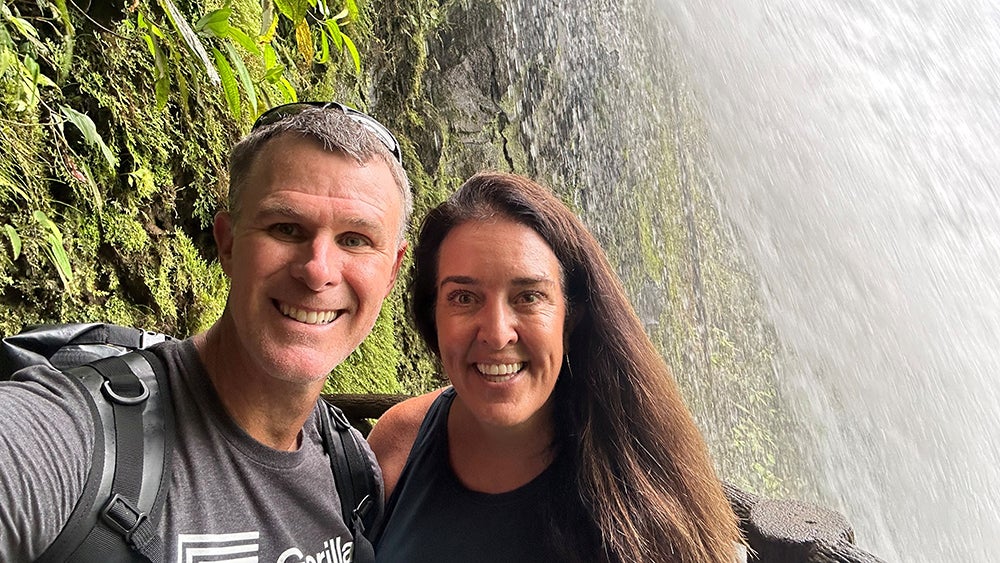
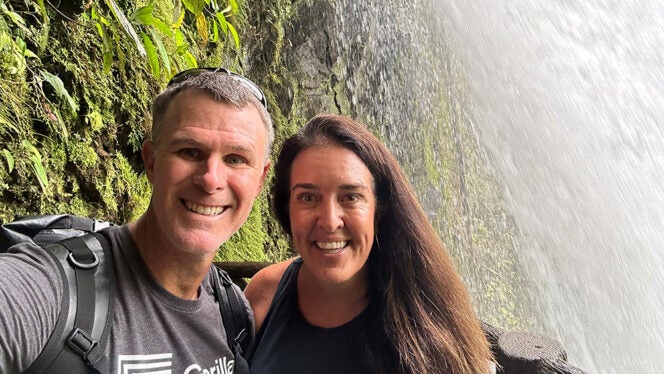
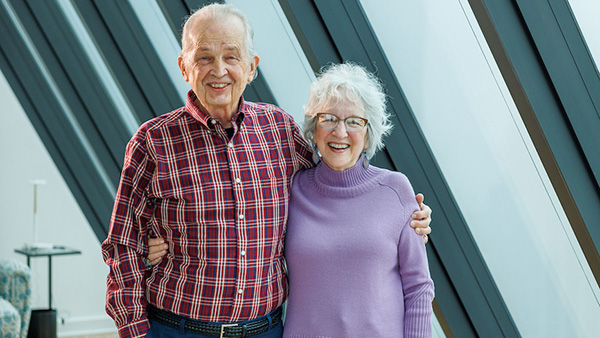
For patients like Drew Naukam (shown at left, with his wife, Sharon), the impact of that work is deeply personal. During a routine checkup, Drew learned he had a congenital heart condition involving a bicuspid aortic valve.
Further evaluation at Baylor Scott & White The Heart Hospital – Plano confirmed he needed valve replacement surgery.
The procedure was successful, and Drew’s recovery moved quickly. Within three weeks, he ran a mile. Within three months, he was back on the soccer field.
Just as meaningful was the support Drew received along the way. “My care team really understood what I needed to recover mentally and emotionally, as well as physically,” Drew said.
Sharon, Drew’s wife, agreed. “There was something kind of magical about the entire team,” she said.
Grateful for his care, Drew and Sharon began exploring ways to support Baylor Scott & White The Heart Hospital – Plano.
“The research, training and education happening in Plano are incredible,” Drew said. “This is a top-tier heart hospital on a global level, and it’s right here in our community.”
Already supporting cardiovascular care through national organizations, the couple decided to focus their additional philanthropic efforts on cardiovascular initiatives that advance research and care here in North Texas.
“Shifting our focus to something local was important to us,” Drew said. “It was a way to make a real impact in our community.”
Hearts changed. Lives changed.
Today, Tim continues running races and competing on the tennis court. Drew remains active and healthy. Both credit the clinicians who cared for them—and the research, training and teamwork that made their care possible.
“What they’re doing in cardiology is life-changing,” Tim said.
He hopes others will consider how they might help make that kind of care possible for the next patient.
“When you think about the care you received,” he said, “you start to wonder how you can help improve that care for someone else.”
For more information, contact