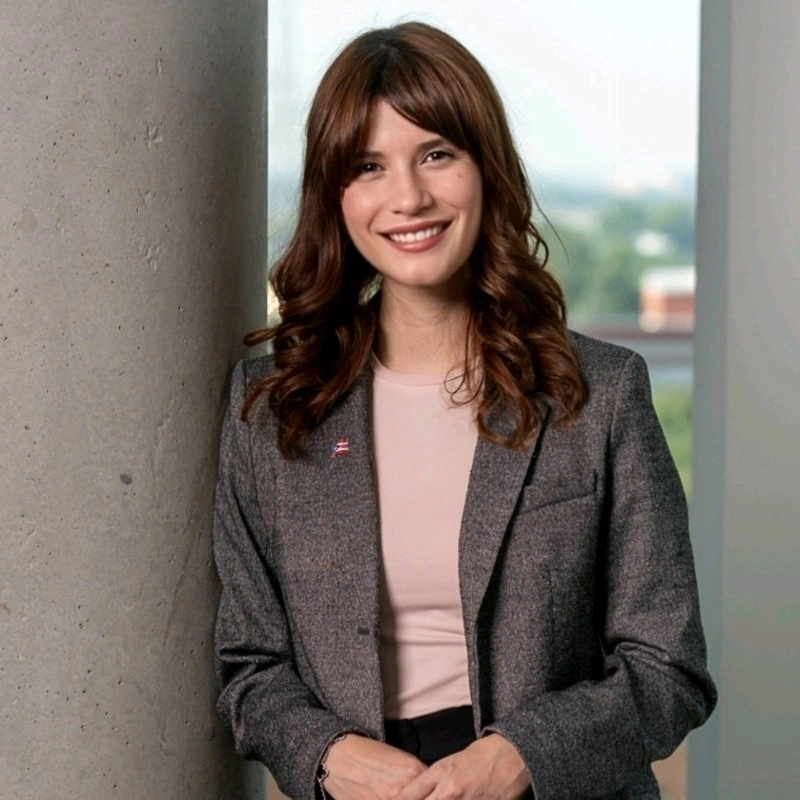



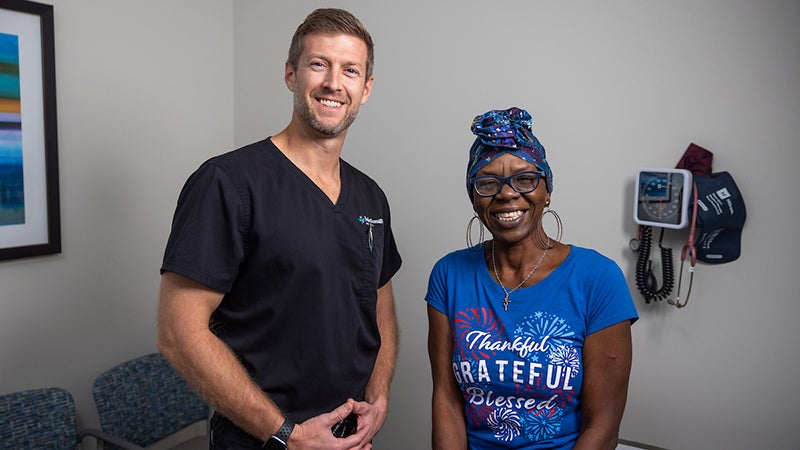
Featured above: Garrett Schwab, MD, has cared for Nicole Buchanan at Baylor Scott & White St. Philip’s Community Care Clinic, helping her take control of her health.
This story is part of our Billion & Beyond series, celebrating the milestone of more than $1 billion distributed to advance healthcare since 1978 and the donors whose generosity continues to shape what’s next.
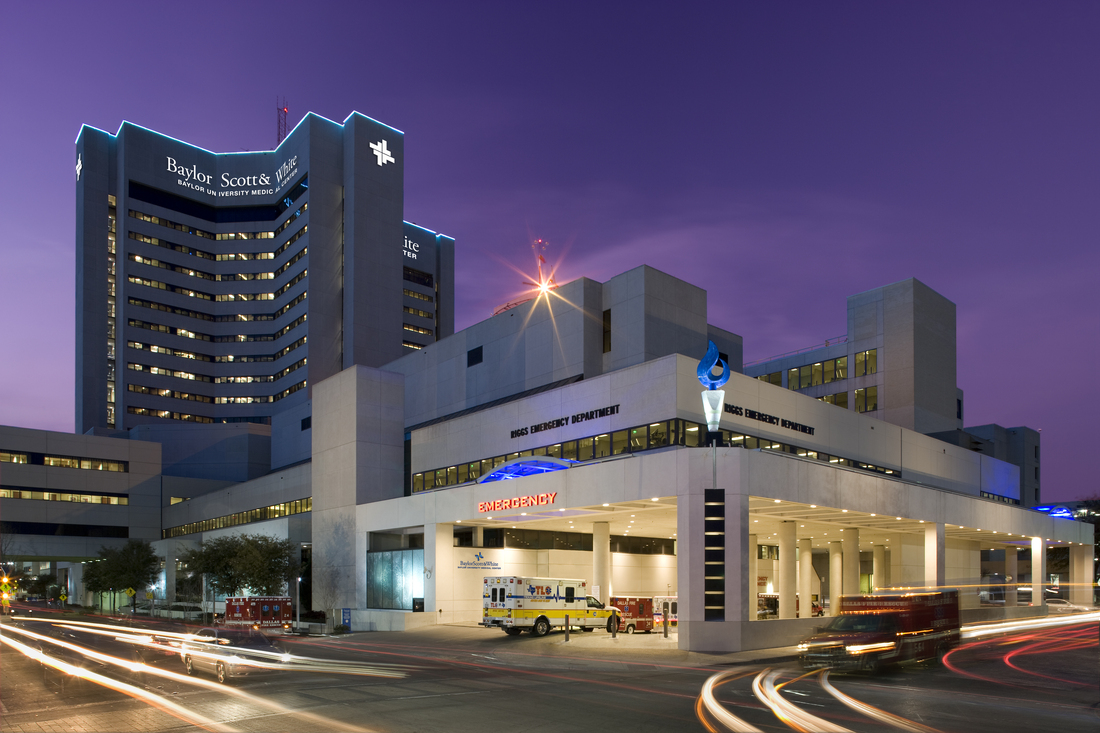
For nearly 20 years, Baylor Scott & White Health Community Care Clinics have provided coordinated, high-quality care for North Texans who are uninsured, underinsured or have household incomes at or below 200% of the federal poverty level. Philanthropy has helped the clinics grow from volunteer-led programs into an integrated model that now serves more than 14,000 patients through 53,000 visits each year.
For patients like Nicole Buchanan, the care made possible through that support can be life-changing.
After surviving a stroke and losing her mother, Nicole was trying to rebuild her life. She had lost confidence in herself and was unsure whether she could work again. At Baylor Scott & White St. Philip’s Community Care Clinic, she found a team that listened, encouraged her and helped her begin rebuilding her health.
“They helped me regain confidence in just being a human being again,” Nicole said. “Without the support of the entire staff, I don’t think I would have made it.”
From volunteer clinics to a medical home
The Community Care Clinics grew from a concern shared by Baylor Scott & White clinicians who saw patients relying on emergency departments because they had no dependable place to receive primary care.
Jim Walton, DO, who led Baylor Scott & White’s community health and health equity efforts from 2006 to 2013, helped shape the early vision. At the time, physicians often volunteered in evening clinics to care for patients who could not afford the care they needed.
“For much of the 20th century, we built hospitals because that was what our communities needed,” Dr. Walton said. “But by the 1990s, we reached a point where we also needed clinics that could provide affordable, high-quality primary care to people in the communities our hospitals served.”
While Jeffrey Zsohar, MD, a double-board certified internist and pediatrician, was caring for underserved patients in Memphis, a mutual colleague connected the two physicians. Their first meeting focused on the lack of dependable primary care for people facing significant barriers to health.
What’s going on right now is not OK.
“What’s going on right now is not OK,” Dr. Zsohar said. “In providing care to those who are most vulnerable, we can improve their lives — and if we do it really well, we can align ourselves so that our system improves, as well,” he added.
Dr. Zsohar later moved his family to Dallas, succeeded Dr. Walton and now serves as medical director of the Baylor Scott & White Community Care Clinics. In this role, he has helped build the inter-disciplinary model in place at Baylor Scott & White today.
Early public and grant funding helped establish teams that brought physicians, nurses, pharmacists, social workers and community health workers together around each patient. Philanthropic support has helped sustain and expand that model as the clinics’ reach and services have grown from a single facility to seven across North Texas.
“When we provide affordable access to a medical home in distressed neighborhoods experiencing health disparities, where they can call their provider by name, that’s when we as a community see movement. And that’s an experience everyone wants,” Dr. Walton said.
Care built around the whole patient
Across North Texas, unreliable transportation, medication costs, food insecurity and unstable housing can turn manageable conditions into emergencies. Community Care Clinics provide preventive care and chronic disease management while helping patients address circumstances that can interfere with recovery. That comprehensive approach is producing measurable results. Patients who established care with the clinics experienced a 46% average reduction in inpatient direct costs compared with those who did not.
Community health workers are central to that approach. As trusted, culturally connected members of the care team, these trained peer navigators screen for barriers that may otherwise go unnoticed—such as difficulty reading medication labels, lack of reliable transportation or having to choose between rent and insulin. They then help patients find practical resources and stay connected to their care. Baylor Scott & White’s integration of community health workers into care teams has earned national recognition, including from the National Association of Community Health Workers.
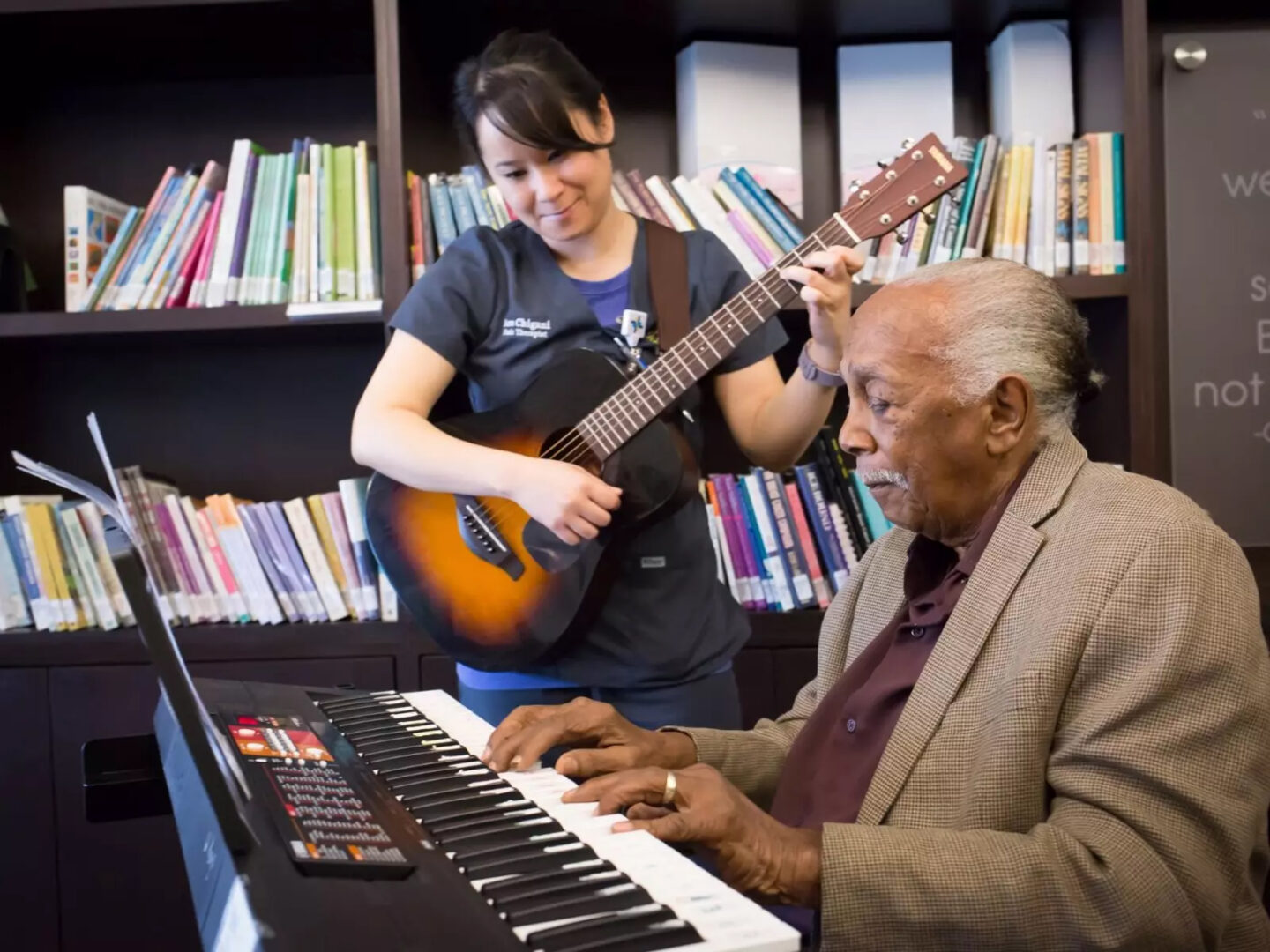
Pharmacists connect eligible patients with affordable medications. Social workers and behavioral health specialists help address grief, depression, anxiety and other challenges that can derail treatment.
There is no silver bullet in community medicine
“There is no silver bullet in community medicine,” Dr. Zsohar said. “There are only relationships, and they require investment, time and the right people.”
After caring for uninsured patients in urban, rural and international settings throughout her career, Lynne Orozco, MD, medical director of Baylor Scott & White Douglass Community Care Clinic, believes the strength of the model lies in its coordination.
“I’ve seen care become fragmented, with duplicate testing, missed communication and patients falling through the cracks,” she said. “Here, we’re all connected through one system. Patients receive the same evidence-based, high-quality care they would anywhere else in Baylor Scott & White.”
Philanthropy expands access
Since the model’s inception, donors have contributed more than $9 million to expand facilities, add care teams and bring new services into underserved communities.
The clinic where Nicole receives care was made possible in part through support from generous donors, including The Rees-Jones Foundation. Opened in early 2026, the new 7,000-square-foot Baylor Scott & White St. Philip’s Community Care Clinic united two existing clinics in a larger space designed to serve approximately 3,250 patients annually and expand family medicine residency training.
“The Baylor Scott & White Community Care Clinic at St. Philip’s is a big win for South Dallas,” said Terese Stevenson, president of The Rees-Jones Foundation. “The expert-level staff have curated a place for neighbors to come find a personal approach to hope and healing right in the heart of their community.”
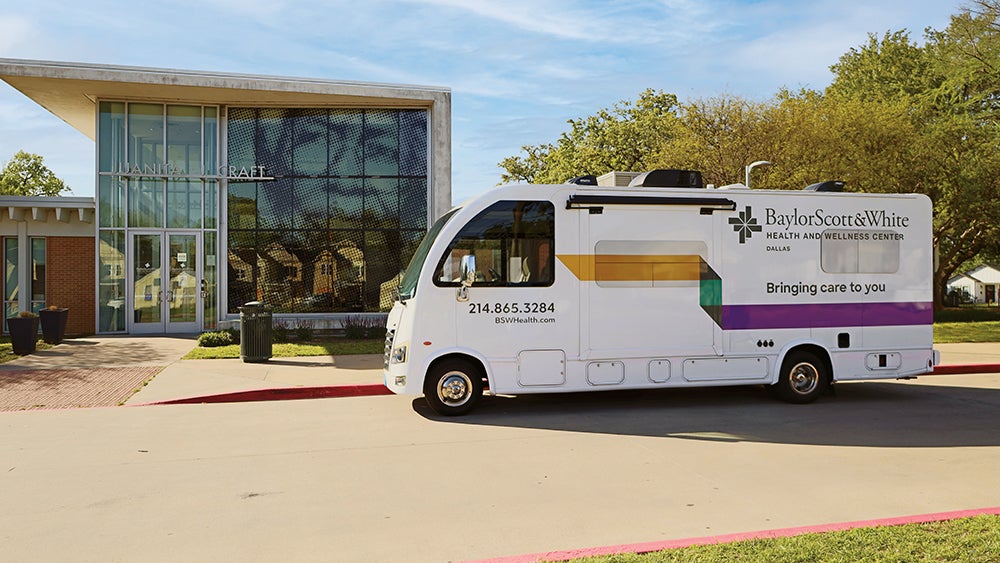
Philanthropy is also helping the clinics reach patients beyond their walls. A gift from the Mary Crowley Foundation helped fund mobile health units operating through the Baylor Scott & White Juanita J. Craft Health & Wellness Center. The units bring cervical cancer screening and early detection services directly into historically underserved Dallas neighborhoods, helping women receive preventive care before delays become life-threatening.
Donor support also helps strengthen services that can be difficult to sustain through traditional reimbursement alone, from community health work and medication access to behavioral health and physician training.
Preparing the next generation
The Community Care Clinics serve as training sites for family medicine residents
and medical students, giving future physicians firsthand experience in team-based community care and a deeper understanding of how barriers such as food insecurity, transportation and medication access can affect patients’ health.
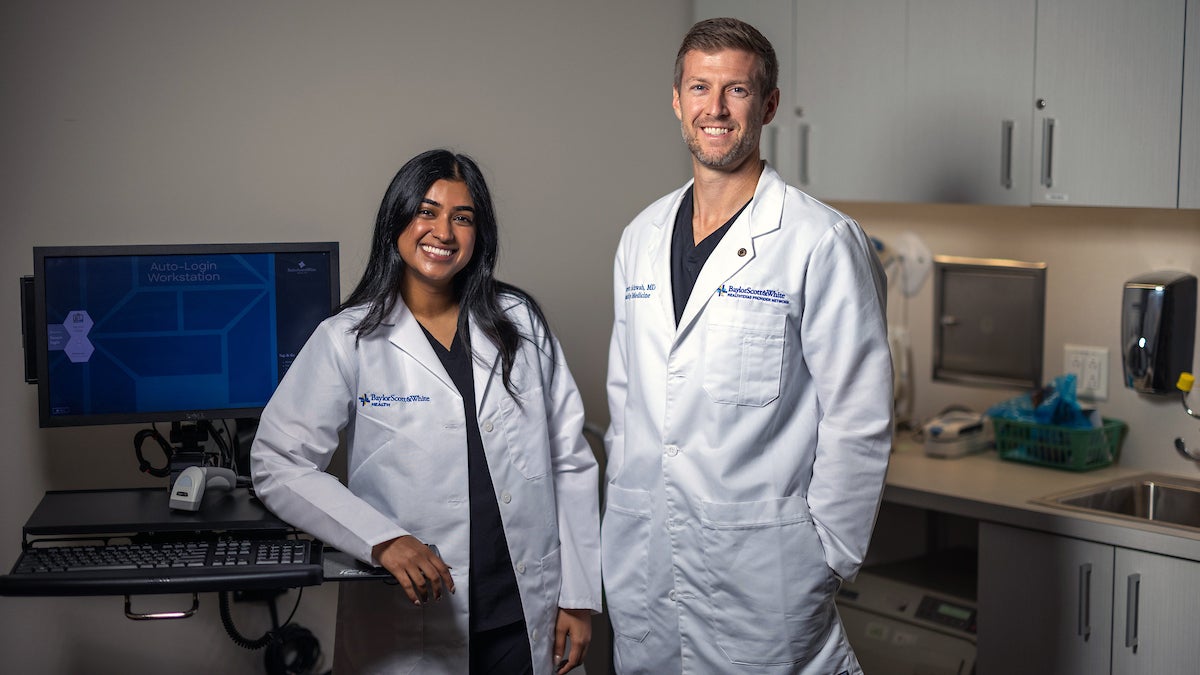
Care Clinic, where new physicians gain firsthand experience providing community-based care.
After working alongside the care teams at Baylor Scott & White Douglass Community Care Clinic, operations manager Angel Barron Salazar decided to pursue his longtime goal of becoming a physician.
“I’ve worked in different hospitals, clinics and volunteer organizations,” Angel said. “The reach and everything we’ve been able to do for patients here at Douglass has been so much more impactful than anywhere I’ve been before.”
In the fall of 2026, Angel began medical school at Texas Tech University Health Sciences Center with plans to specialize in family medicine and one day practice in a community clinic like Douglass.
Like Nicole, he has seen what can happen when patients have access to consistent, compassionate care. And like the physicians who inspired him, he hopes to help build healthier communities for years to come.
To learn how you can help expand this proven model of care and support primary care, behavioral health services and physician training for North Texans in need, contact