




The older siblings weren’t allowed inside the NICU.
They were too young to visit their baby brother, born prematurely and now surrounded by monitors, wires and careful hands. As the days stretched into weeks, they began asking their mom if the baby was even real.
Their world had changed overnight. Their mother was spending long hours at the hospital. Routines were disrupted. Fear and confusion crept in.
That’s when music therapy stepped in — not with grand gestures, but with a heartbeat.
A small device, a powerful connection
Through the Heartbeat Recording Project, supported entirely by philanthropy, a music therapist records a baby’s heartbeat using a specialized stethoscope and audio software. The sound is placed inside a small, heart-shaped device tucked into a stuffed animal — a “heartbeat bear.”
For this family, those bears became a lifeline.
The siblings could hold something tangible. They could press the bear and hear their baby brother’s steady rhythm. Suddenly, the baby wasn’t an abstract idea behind hospital doors. He was real. He was alive. He was theirs.
Their mother later shared how grateful she was to have something that helped her older children replace fear with curiosity and confusion with pride. Even after the infant was transferred to a hospital closer to home, the heartbeat bears remained — quiet reminders of connection during an uncertain season.
Moments like these are made possible by donors who believe healing includes comfort, connection and creativity.
Music at the bedside
Each year, approximately 600 babies receive specialized care in the Level IV Neonatal Intensive Care Unit at Baylor University Medical Center. For families, the NICU journey can be overwhelming — filled with medical terminology, procedures and long stretches of waiting.
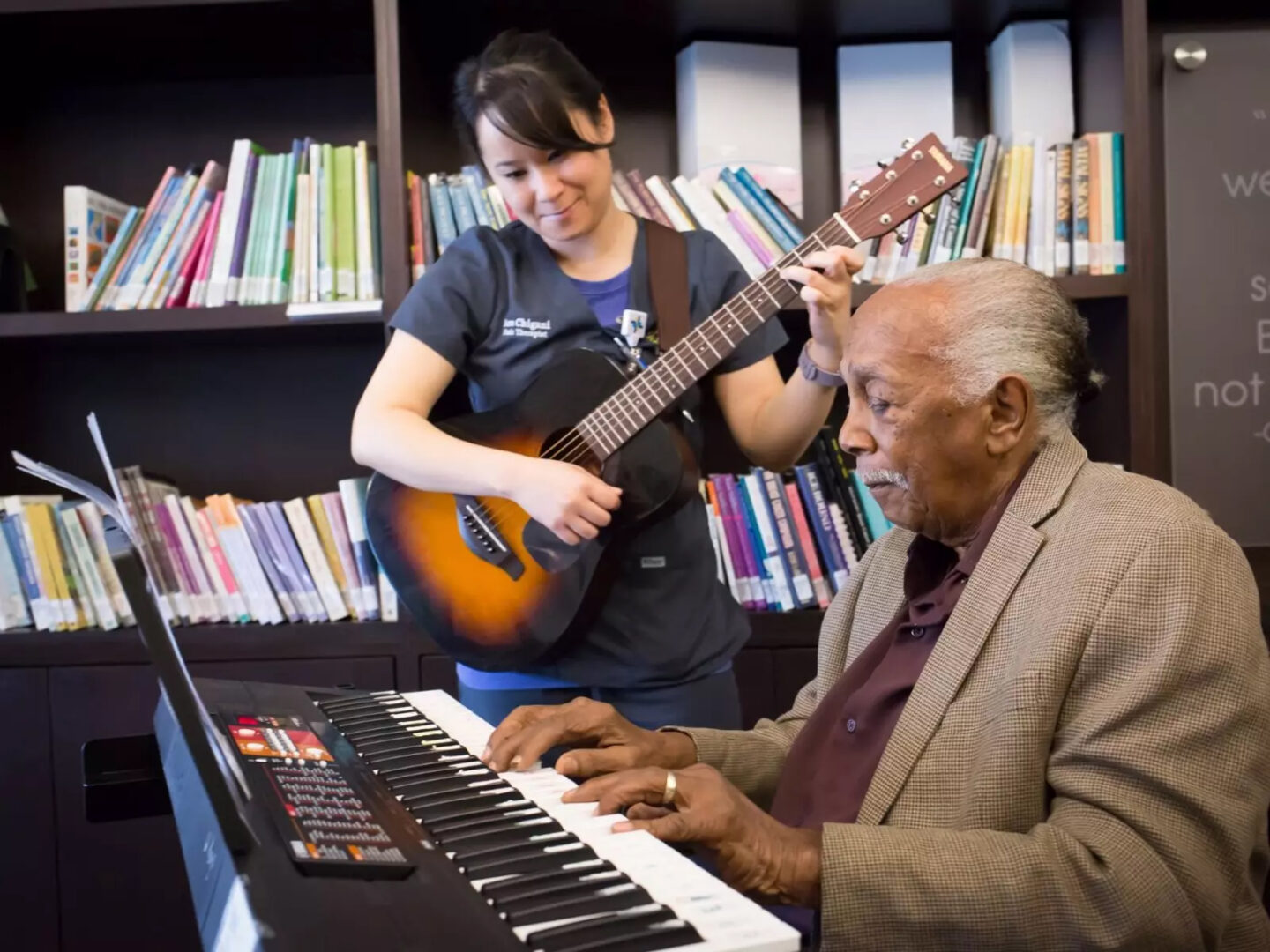
Thanks to philanthropic support, music therapy is woven into that environment.
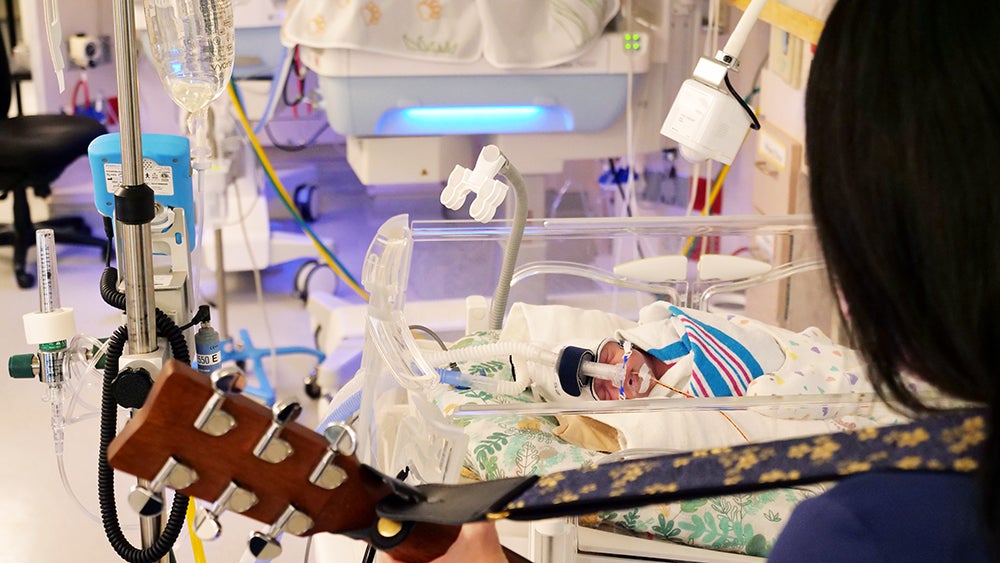
Research shows that music therapy can help soothe newborns during stressful procedures by stabilizing breathing and heart rate and supporting a return to a calmer state. In the NICU, even routine care can be intense for premature infants. Weekly eye exams, for example, are necessary but often unsettling.
During these moments, gentle humming or live lullabies can quiet the room. Nurses have watched monitors steady. Parents have seen their babies settle more quickly. Sometimes, it is the smallest melody that makes the biggest difference.
Since fiscal year 2021, donor support has made more than 2,500 music therapy sessions possible in the NICU — including 474 last year alone. The Heartbeat Recording Project now averages about 11 recordings each month.
Every session. Every recording. Every quiet song at the bedside is funded through philanthropy.
Supporting development from the very beginning
For infants in critical care, music is more than comforting — it can be developmental.
“We were able to reach all of our patients, regardless of age, through simple melody,” said Brittney Stelzel, NICU and Women’s Services music therapist. “For infants, when we hummed to them, we were literally helping them develop processing capabilities and strengthen their auditory systems. It had such a large impact for such a little give.”
In other words, these moments are not just soothing in the present. They may shape how an infant processes sound, regulates stress and bonds with caregivers long after leaving the hospital.
Looking ahead, a new research study will explore whether personalized lullabies sung by parents can further support infant development and strengthen bonding during touch time. If approved, the study will build on the foundation donors have already established, continuing to expand what’s possible in neonatal care.
By the numbers
- 2,500+ music therapy sessions provided in the NICU since FY21
- 474 sessions delivered last year alone
- 11 heartbeat recordings created each month, on average
- 100% of NICU music therapy funded through philanthropy
- New research study exploring parent-sung lullabies and infant development
Healing beyond medicine
In the NICU, healing is measured in ounces gained, oxygen levels stabilized and milestones reached.
But it is also measured in quieter ways:
- A mother exhaling for the first time that day
- A sibling pressing a small heart and hearing proof of life
- A room that feels, for a moment, less clinical and more human
As Arts in Medicine marks 10 years of impact in 2026, music therapy in the NICU stands as a powerful example of what philanthropy makes possible. Thanks to donor generosity, families navigating one of the most vulnerable chapters of their lives are met not only with exceptional medical care, but with compassion expressed through melody.
In a place defined by monitors and medicine, donors ensure that the sound families remember most is a heartbeat — steady, strong and surrounded by love.
Every session, recording and research advancement is made possible by donor support.
For more information, contact