


Editor’s note: This story is part of our Billion & Beyond series, celebrating the milestone of more than $1 billion distributed to advance healthcare since 1978. These stories honor the donors and visionaries whose generosity propels Baylor Scott & White Health toward its next century of impact.
Imagine a future where chronic disease with aging is not inevitable. It’s preventable. Where artificial intelligence helps physicians predict disease before symptoms appear. Where participating in clinical research is as simple as opening an app.
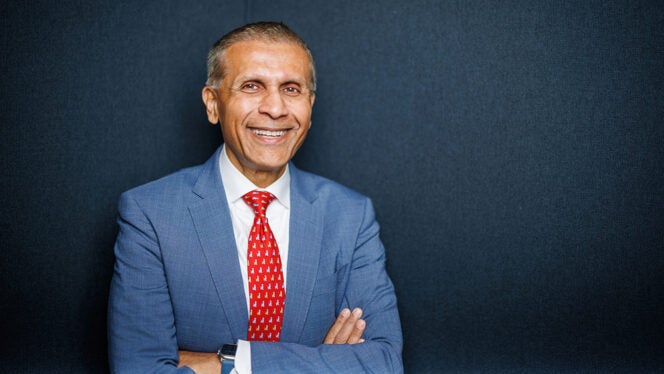
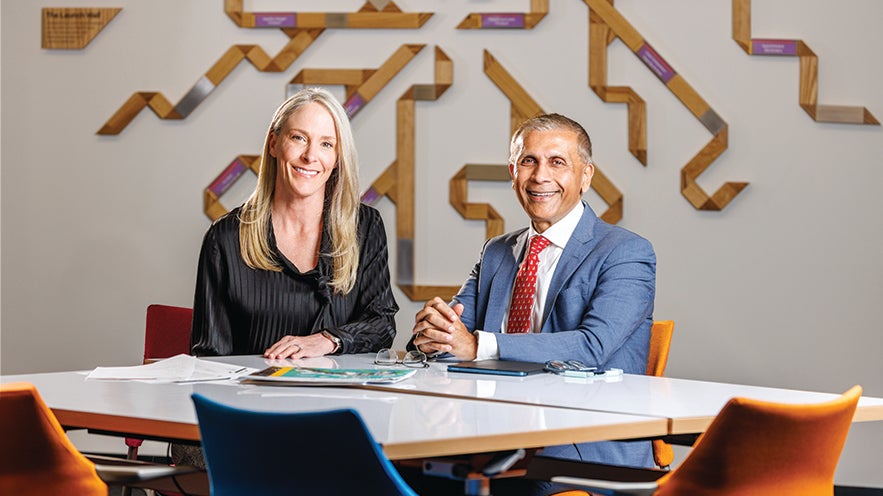
That’s the vision guiding Javed Butler, MD, MBA, MPH, president of Baylor Scott & White Research Institute (BSWRI), and the driving force behind a new Multi-Hub Network designed to close one of healthcare’s most persistent gaps: the time it takes for proven medical discoveries to reach everyday patient care.
“By the time a therapy becomes a Class 1 recommendation in practice guidelines, meaning that in the absence of a contraindication every eligible patient should receive it, it often takes north of 15 years for such therapies to reach the intended patients widely,” Dr. Butler said.
For Dr. Butler, this “implementation gap” is the heart of the problem—and the opportunity. The Multi-Hub Network, powered by philanthropy and rooted in data science, aims to transform how research is conducted, shared and applied across Baylor Scott & White.
A shared vision, sparked by generosity
The vision is already taking shape, thanks to transformational gifts totaling $8.4 million from Ashley and Greg Arnold, whose generosity laid the groundwork for the Multi-Hub Network—connecting data science, clinical trial innovation and implementation research into a single, scalable system.
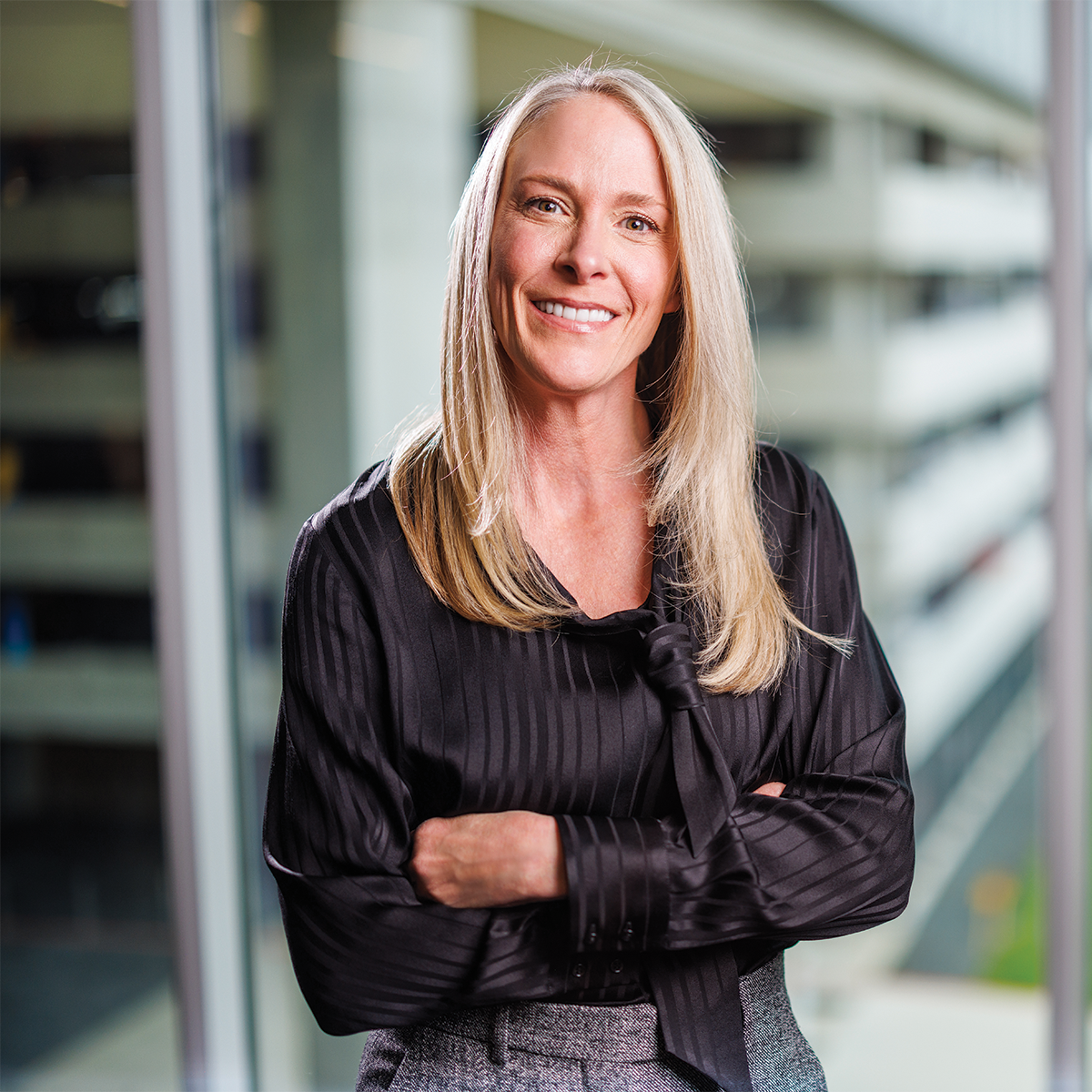
“For us, the power is in shifting a whole region from treating symptoms to focusing on prevention,” Ashley Arnold said. “The data is already there. Why don’t we empower that data—and then add AI to help us move faster?”
This vision of population-level impact underscores why philanthropy is so essential: it gives researchers the runway to pursue prevention strategies whose benefits will continue to scale over decades.
From discovery to delivery
Traditional research models have focused on either bench science or clinical trials. But Dr. Butler and his team are leaning into a third essential branch: implementation science, the study of how to translate proven innovations into routine practice faster and more effectively.
“The Multi-Hub Network gives us a platform to do that,” Dr. Butler said. This approach is realized through three coordinated hubs:
- Data & AI Innovation Hub. Using machine learning to identify high-risk patients before complications arise.
- Clinical Trial Innovation Hub. Decentralizing research so participation is accessible to everyone, including rural and underserved populations.
- Implementation Science Hub. Ensuring that what works rapidly becomes standard care across the system.
Together, these hubs form a continuous loop between data intelligence, evidence generation and care delivery—a model that could redefine how the nation approaches chronic disease prevention.
A new model for clinical trials
Only a small fraction of Americans eligible for clinical trials ever enroll, a challenge Dr. Butler believes can be fixed through innovation and access.
“We have to stop living in the 1980s,” he said. “Why can’t we take research to the patient’s home? Many, if not most, research procedures don’t need to happen downtown. They can be done in patients’ own communities—even at home or online.”
That philosophy drives the Clinical Trial Innovation Hub, which integrates the system’s Epic electronic health record with the MyBSWHealth app. The goal is for researchers to identify eligible patients and invite them to participate, making access to trials seamless. The app also enables e-consent, remote monitoring and secure communication between patients and research teams.
The transformational gift from the Arnolds allowed for the upgraded research infrastructure in Epic to happen two years earlier than planned. Beyond being a transformational gift, it helped launch a “care journey” demonstration project on the MyBSWHealth mobile app, offering a glimpse into how research can directly enhance the customer experience and care pathways.
“Three years ago, research and patient-facing platforms operated separately,” Dr. Butler said. “Now we’re beginning to bring them together through a research tab in the MyBSWHealth app, where patients can learn about studies that may be a good fit and, when appropriate, provide electronic consent. It’s good progress.”
The role of philanthropy: building the infrastructure of innovation
Philanthropy fuels BSW’s research enterprise at every scale—from ambitious, systemwide collaborations like the Texas Cancer Interception Institute (TCII) to small, early-stage “go/no-go” studies that test new ideas.
These early pilot projects are where big discoveries begin. Philanthropy allows researchers to gather preliminary data that makes them competitive for national funding. For example, the transformational gift helped launch a myocardial infarction registry, which offers deeper insight into heart function post-heart attack and is paving the way for other individual projects.
At the same time, donor investment in broad initiatives like brain health, cancer, obesity or cardiovascular health strengthens the research ecosystem, connecting genetic and environmental insights to real-world prevention and treatment strategies.
Together, these layers, large and small, make innovation sustainable and scalable.
A Texas-sized advantage
What makes Baylor Scott & White uniquely equipped to lead this transformation? Scale—and diversity.
“I simply cannot think of any patient population that is not represented within BSW’s bigger tent—young, old, men, women, rural, urban, all ethnicities and races,” Dr. Butler said.
Statewide reach allows BSWRI to create real-world, representative research—something most academic medical centers can’t achieve.
“At traditional academic medical centers, patients come downtown for specialty care, then return to their communities for primary care,” Dr. Butler said. “We can follow our patients across the entire continuum.”
From the lab to the living room
Ultimately, Dr. Butler says research must center on patients and prevention.
“If you ask patients what they want from us, the number one thing they want is to have nothing to do with us. They want to live their lives outside the hospital, without diseases, without complications. The only way you do that is by treating comorbidities better—managing blood pressure, cholesterol, diabetes, obesity, and screening for heart disease, kidney disease and cancer early, so people don’t develop diseases or disabilities in the first place.”
That vision—proactive, patient-centered and data-driven—defines the future he’s building. In less than a decade, Dr. Butler wants Baylor Scott & White to be recognized not just for exceptional care or education, but for research that changes practice.
“This is a baby step,” Ashley said. “It’s going to take thousands, maybe hundreds of thousands of steps to get to where this program needs to be, and then to the next level and the next level. It’s exciting just to have the opportunity to help build the infrastructure that gets us there.”
A call to accelerate progress
The Multi-Hub Network lays the groundwork for a future where discoveries reach patients sooner and prevention becomes standard practice. By uniting data science, clinical innovation and implementation, BSWRI is positioned to be a national leader in preventing chronic disease.
For donors, the opportunity is clear: to help close the distance between idea and discovery and between discovery and delivery—and between illness and health—for millions of patients across the region.
For Dr. Butler, philanthropy’s greatest power is in the transformations it sparks behind the scenes. “Philanthropy builds what traditional grants don’t,” he said. “It supports the infrastructure—the people, the computing power, the data systems—everything that allows research to happen and discoveries to reach patients.”