



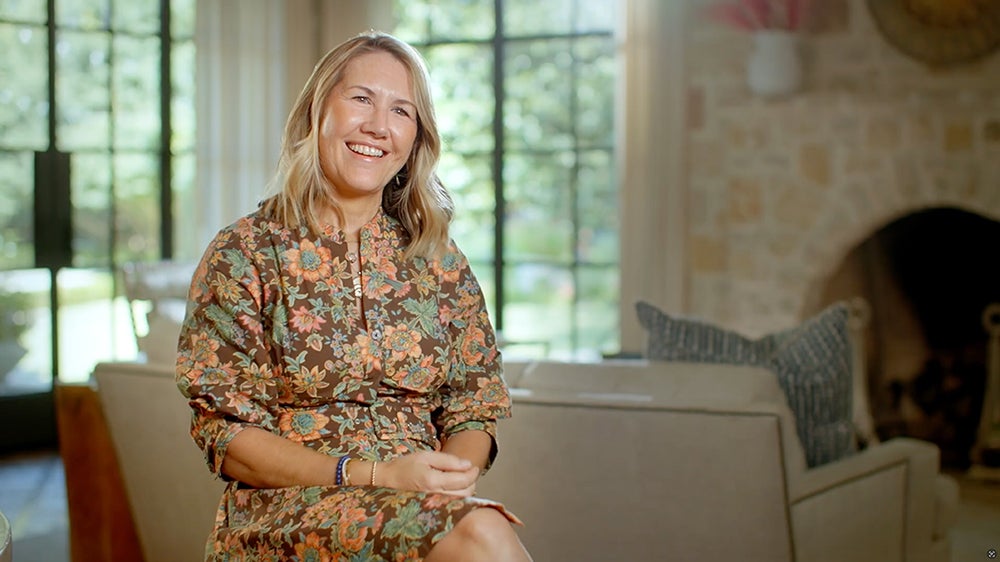
Amy Zicarelli has always defined herself by her relationships.
She’s a mom. A sister. A daughter. A wife.
She grew up in North Texas, where her mother was known as the “Bluebonnet Queen” for her leadership with Bluebonnet Trails. Being her daughter was something Amy considered a gift.
In July 2019, that gift was threatened.
Amy’s mother went in for a routine mammogram. “They found a little something,” she told her daughter. Amy pushed for further testing. A PET scan revealed the cancer had already spread to her liver. It was stage IV.
Her mother died on November 9, 2021 — the same day Amy’s daughter turned 13.
Four months later, Amy found a lump under her own arm.
Facing an aggressive breast cancer diagnosis
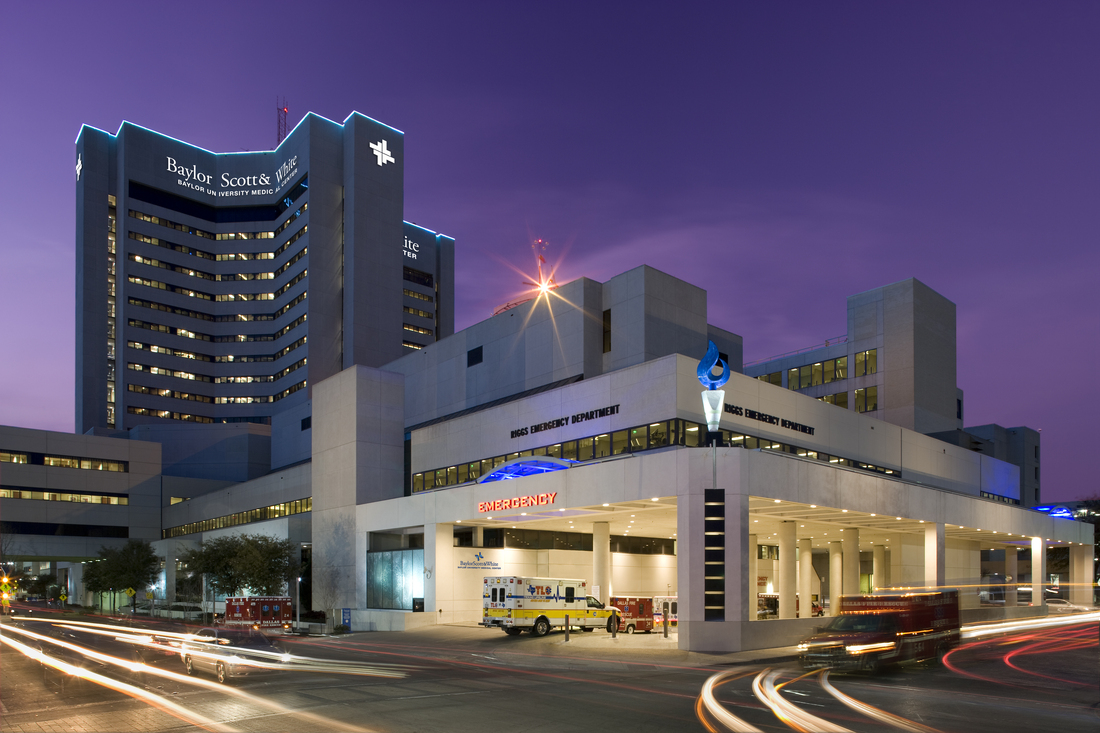
Amy called her OB the next day. Within hours, she was undergoing a diagnostic ultrasound at Baylor Scott & White.
The radiologist sat beside her, held her hand and said gently, “I’m concerned.”
A biopsy confirmed it: aggressive breast cancer.
Her children had just walked through the loss of their grandmother. Now they were facing their mother’s diagnosis.
“We told them, ‘You’re going to see Mom get sick — and it’s because she’s fighting this cancer,’” Amy says.
One child asked the question no parent wants to hear: Would she be gone by the time he went to college?
Finding the right path
Amy sought multiple opinions. When she mentioned she was seeing Joyce O’Shaughnessy, MD, one physician responded immediately: “That’s who you need to go see.”
Dr. O’Shaughnessy reviewed Amy’s history before they even met. She knew about her mother. She knew the tumor. She knew the options.
Her recommendation surprised Amy: chemotherapy first.
After 16 rounds of cutting-edge treatment, the results were devastating. The tumor had grown.
Dr. O’Shaughnessy didn’t waver. “Another round,” she said. “Let’s keep going.”
Advancing breast cancer discovery
The Dr. Joyce O’Shaughnessy Endowment accelerates early-stage research and clinical trials at Baylor Scott & White — ensuring patients have access to cutting-edge treatment options.
Amy ultimately endured 26 rounds of chemotherapy before surgery. Though she was not formally declared in remission, there was no evidence of disease.
Standard treatments hadn’t worked as expected. So they looked further — to clinical trials.
Why clinical trials matter
For patients like Amy, the intersection of research and clinical care is not theoretical — it’s personal.
At Baylor Scott & White, physician-scientists like Dr. O’Shaughnessy guide patients through treatment while simultaneously advancing research in the lab. Clinical trials offer options when standard therapies fall short, helping pave the way for future patients.
That dual role — clinician and researcher — can change the trajectory of a life.
Three years after her diagnosis, Amy reached a milestone she once feared she might not see.
“You’re at the three-year mark,” Dr. O’Shaughnessy told her.
They hugged. They celebrated. And then came the steady reassurance that has defined Amy’s journey:
“We’re going to keep going. I’ll see you in three months.”
Philanthropy fuels progress for patients like Amy
When standard treatments fail, clinical trials — powered in part by donor support — offer new possibilities. At Baylor Scott & White, physician-researchers are advancing breast cancer care every day, bringing hope to families facing the unimaginable.
Your generosity helps accelerate discoveries that give patients more time, more options and more milestones worth celebrating.